Beyond AI Agent Detection: Verify the Human Behind the Agent
Human-in-the-loop verification powered by precise apartment-level location, device intelligence, and network risk.
Subscribe to Incognia’s content
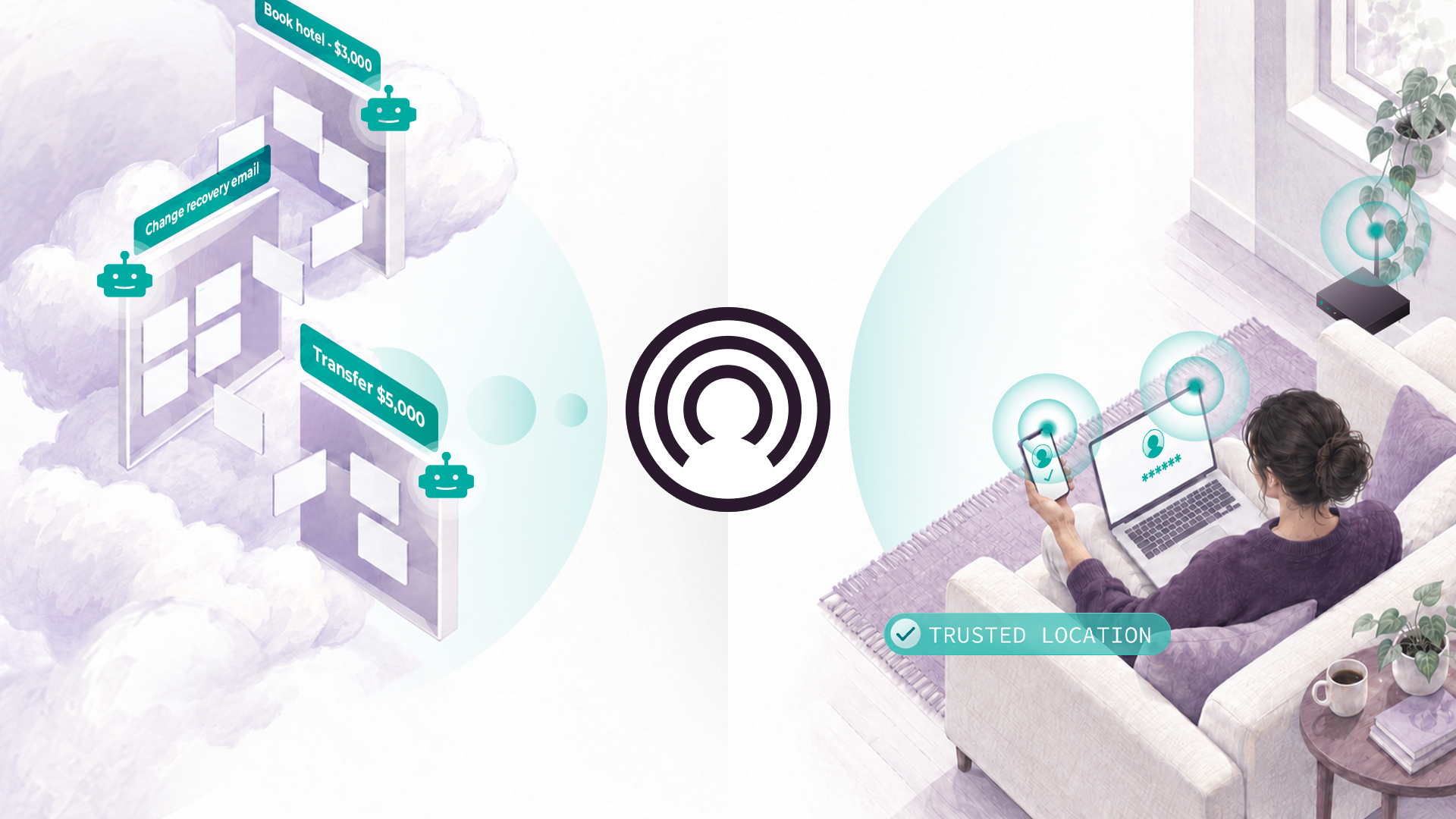
An AI agent requests a change to a customer’s bank account recovery details. Its signature is valid.
But did the customer authorize the change?
A valid signature helps verify the signing identity, not the customer’s permission.
AI agent detection and agent authentication answer different questions.
AI agent detection identifies when activity is being performed by an AI agent or another automated environment. Agent authentication verifies the source of a signed agent request. Neither establishes whether the customer authorized a specific action.
Prompt injection can mislead an agent. Replay attacks and credential theft pose additional risks that agent identity alone cannot address. And when an agent runs in the cloud, its browser, server, and network may reveal little about the customer behind the action.
Incognia brings physical-world trust to agentic actions
Incognia combines AI agent detection and authentication signals with customer, device, location, and network intelligence to assess agentic actions.
For higher-risk actions, human-in-the-loop verification reconnects the request to customer-side evidence.
What sets Incognia apart is precise apartment-level location intelligence, down to the apartment level. For higher-risk actions, human-in-the-loop verification brings the customer’s mobile device and physical-world history into the assessment.
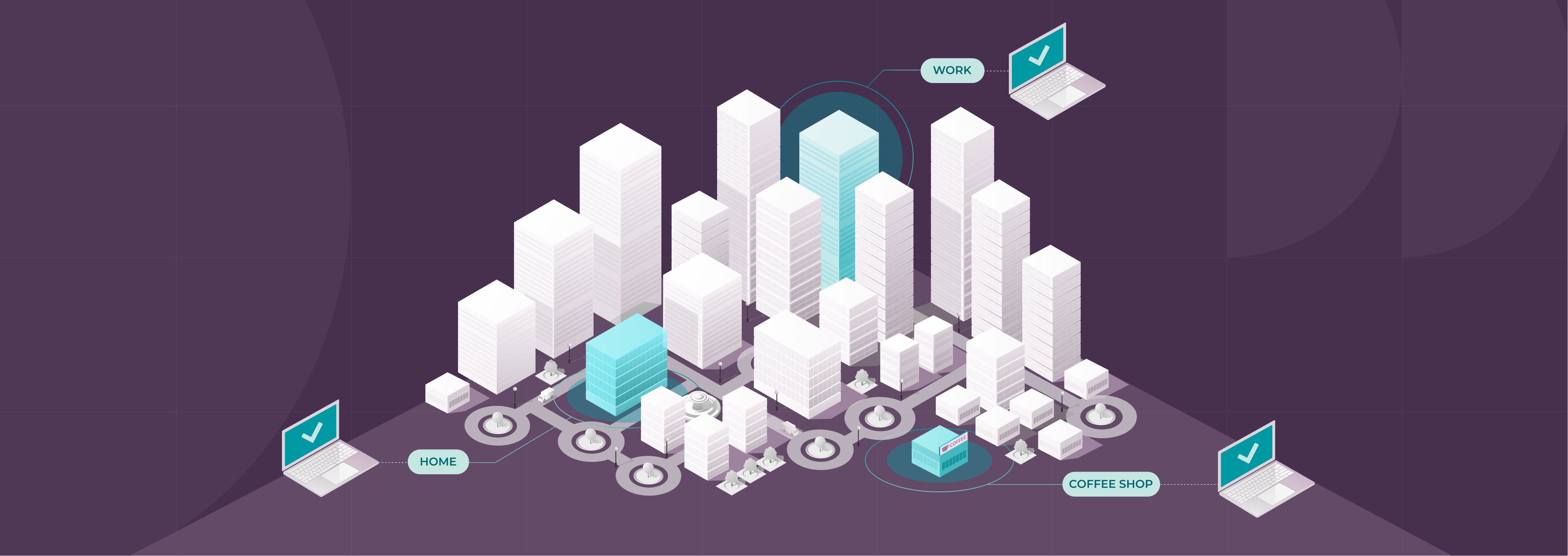
Location is one input, not a home-only approval rule. Incognia evaluates it alongside device recognition, account history, integrity, and network risk under the business’s policies.
Detect automation. Authenticate signed requests.
Incognia uses bot and automation detection to identify automated activity. Web Bot Auth authenticates participating agents’ cryptographically signed requests. Agent-origin classification adds known provider or infrastructure context when available.
Unsigned requests can still be assessed through available bot/automation detection and other risk signals. A missing signature alone does not establish abuse.
Assess risk beyond the agent’s identity
For routine and sensitive actions, Incognia combines agent and automation signals with available browser, device, and existing risk intelligence.
The business decides whether to allow, scrutinize, or request customer verification under its permissions and risk policies. Incognia supplies intelligence, not final authorization.
Ground human-in-the-loop verification in customer evidence
Incognia assesses the device and physical context behind the approval through four sources of evidence:
-
Precise apartment-level location. Incognia assesses the phone’s physical context and location history. Trusted places can add confidence; known high-risk associations can warrant scrutiny. An unfamiliar place alone does not establish fraud or justify blocking an agent.
-
Device and account continuity. Persistent device recognition and account relationships connect verification to an established history, rather than evaluating the agent’s session in isolation.
-
Tamper, malware, and RAT detection. Incognia assesses signs of compromise and, on supported devices, detects remote access tools (RATs), including when they are active during app use. Remote access alone does not establish abuse.
-
Network-level risk intelligence. Incognia protects more than 1 billion devices each month. Known device and location risk associations add context beyond one request or account.
Physical-world history and device integrity can help establish evidence of a real person behind the agent by connecting verification to the customer's device and established account relationship. Combined with established account relationships, they add continuity beyond the agent’s session. Neither replaces customer authorization.
From a signed request to a trusted customer
Here are a few specific examples for banks and marketplaces:
Routine banking: no additional challenge
A customer authorizes an agent to check their balance within permissions accepted by the bank.
Incognia authenticates the signed request, assesses available origin and automation signals, and validates the agent’s relationship with the user.
A validated relationship is not blanket authorization. Within those permissions and the bank’s risk policy, the agent can complete the task without another customer-verification step.
Sensitive account changes: human-in-the-loop verification
The customer later asks the agent to change their account-recovery information.
The bank presents the specific change in its mobile app for direct approval.
The bank combines Incognia’s available device, account-relationship, integrity, location, and network evidence with customer confirmation. If its risk and authorization requirements are met, it allows the change.
A recognized phone at home can still be controlled remotely. Active RAT use during verification, other signs of compromise, or known high-risk device or location associations can justify stopping the action or requiring further verification before accepting approval.
A fraudster with account access could use the same agent service and still send a valid signed request. If the customer rejects the change or required approval is missing, the bank does not execute it. Reassuring risk signals do not override missing approval.
The same agent can produce different outcomes. The customer, action, and risk evidence determine the decision.
For cloud agents, customer-side device and location evidence enters when the mobile device joins verification. The customer’s location is distinct from the agent’s execution location.
For agents in the customer’s browser, Incognia assesses Browser ID, bot and automation detection, and other available web signals. Cross-device verification can also check whether that browser session and the approving phone are in the same physical location.
Hotel bookings: approve without restarting
A traveler in a new city asks an agent to book a $3,000 hotel stay.
At checkout, the marketplace requests confirmation of the hotel and price in its mobile app. Incognia assesses precise location, device recognition, account history, and integrity together, not the unfamiliar location alone.
With customer confirmation and the platform’s risk and authorization requirements met, the agent completes the booking without restarting the process.
More confidence to let agents do more
Challenging every action defeats delegation. Trusting every recognized agent ignores risk.
Incognia helps businesses enable legitimate agentic purchases, payments, and account changes with risk-based controls. When needed, human-in-the-loop verification adds precise indoor location, device, and network evidence tied to the customer.
Let the agent do the work. Bring the human into the loop when it matters.
Enable trusted agents. Keep humans in control.
Talk to our team about AI agent detection and human-in-the-loop verification for your platform.
Frequently asked questions
What is AI agent detection?
AI agent detection helps identify when an interaction is being performed by an AI agent or other automated environment. It does not establish customer intent, permission or whether a specific action should be trusted.
What is the difference between agent detection and agent authentication?
AI agent detection identifies automated or agentic activity. Agent authentication verifies the source of a cryptographically signed agent request. They answer different questions: detection asks whether an agent is acting; authentication helps establish which verified agent sent the request. Neither establishes customer authorization.
Does a verified agent make an interaction trustworthy?
No. A legitimate, authenticated agent can still act through a compromised account, outside customer permissions, or on manipulated instructions. Authentication provides evidence about the agent; trust still depends on the customer, the action, authorization, and surrounding risk context.
What is human-in-the-loop verification?
Human-in-the-loop verification brings the customer back into a sensitive agentic action when direct confirmation or additional evidence is required. Incognia can assess the customer's device, account relationship, integrity, location context, and network risk alongside the customer's approval.
How do you verify the human behind the agent?
For actions that require direct customer verification, businesses can bring the customer into the flow through a trusted mobile device. Incognia can then assess device recognition, the device's relationship with the account, device integrity, apartment-level location context, and network risk alongside the customer's confirmation of the specific action.
When should an AI agent action require customer approval?
Businesses can allow lower-risk agentic actions to proceed under their existing permissions and policies while requiring direct customer confirmation for higher-risk or sensitive actions. Examples include large payments, account recovery changes, credential changes, or other actions that require fresh authorization. Incognia provides risk intelligence to support that decision; the business defines the policy.