Introducing Incognia’s Real-Time Scam Prevention, Grounded in the Physical World
Incognia's new Real-Time Scam Prevention solution helps banks identify potential scams before money moves. Powered by our Physical Social Graph, it uses apartment-level location intelligence and persistent device recognition to uncover signals of real-world relationships between senders and recipients. Combined with additional risk signals, this intelligence helps banks identify suspicious payments and make more informed decisions about when to intervene.
Subscribe to Incognia’s content
A customer logs into their banking app from their usual device, at a location they frequently visit, and authorizes a payment.
Everything about the activity looks legitimate. The device is recognized, the location is familiar, and the customer is genuinely initiating the transaction.
But really, the customer has been manipulated into sending money to a scammer.
This is what makes payment scams so difficult to detect. The bank can confirm that the person making the payment is the legitimate account holder, but that doesn't necessarily tell them whether the recipient can be trusted.
To detect these scams, banks need to look beyond the person sending the money.
Understanding who is receiving the payment and their relationship to the sender can reveal signs of a scam that the customer's own activity wouldn't show.
Introducing Incognia’s Real-Time Scam Prevention
Incognia's Real-Time Scam Prevention helps banks identify potential scams by looking at who is receiving a payment, their relationship to the sender, and how they're connected to other accounts.
In an analysis of transactions from a bank with more than 80 million active users, Incognia identified approximately 70% of scam transactions.
At the center of the solution is the physical social graph. It uses historical location patterns and persistent device intelligence to identify signals that may indicate real-world relationships between people.
This gives banks additional context about the sender and recipient that they wouldn't get from looking at the payment alone.
Incognia combines this information with other risk signals, including mule account detection, active-call detection, remote-access detection, and device tamper detection.
Banks receive a real-time risk assessment and individual signals they can use alongside their own data to decide whether a payment needs further attention.
Understanding relationships through physical-world behavior
Two people don't have to live near each other to have a real-world relationship.
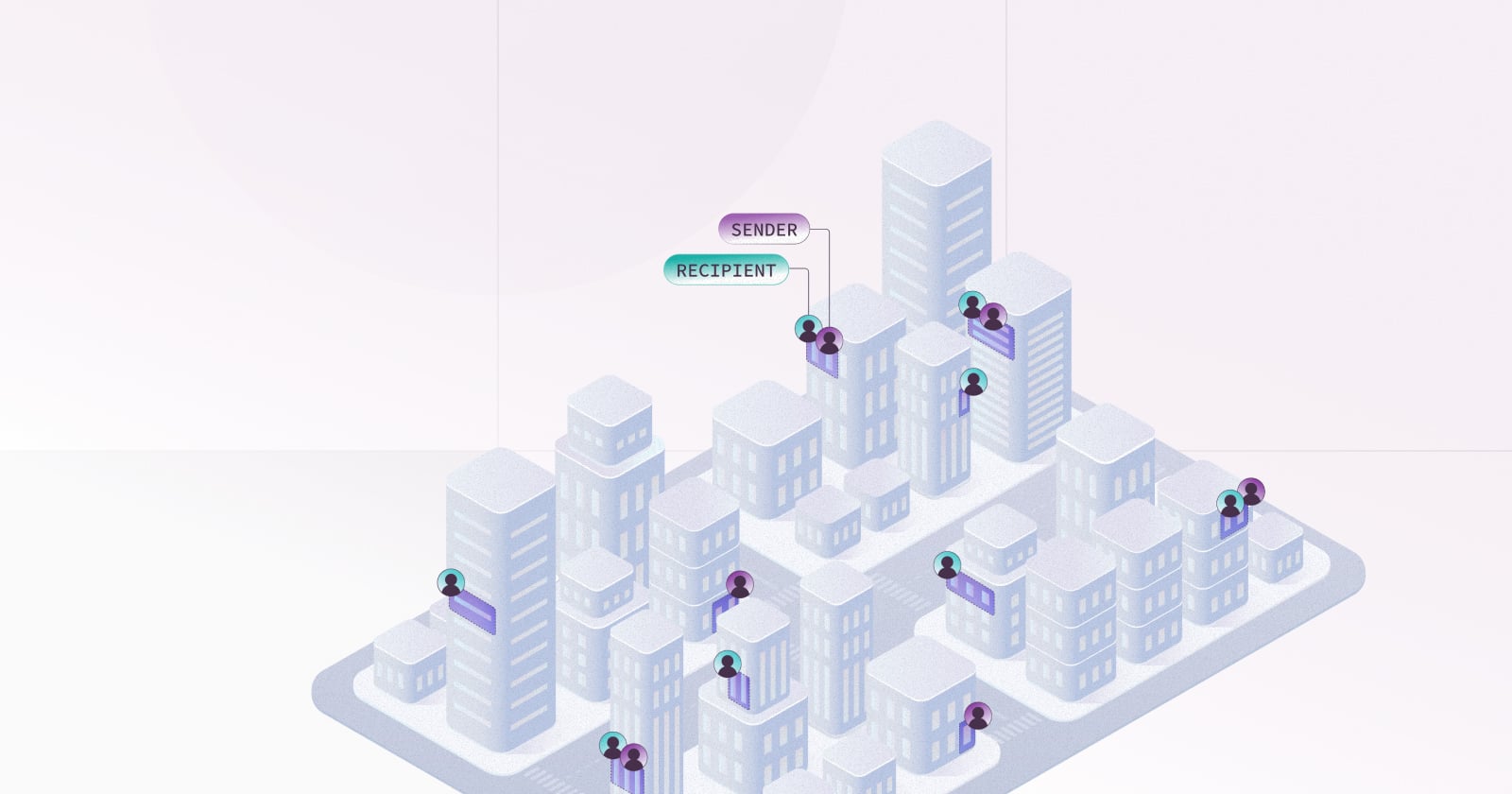
For example, someone who lives hundreds of miles away but regularly visits the same apartment may have a meaningful connection to the person who lives there. Meanwhile, someone living in the apartment next door may have no relationship with that person at all.
Incognia has found that nearly 79.2% of legitimate transactions occur between users with a physical-world relationship, while 86.2% of reported scams involve transactions between users with no physical-world relationship.
This is why looking at location history over time is more useful than simply measuring the distance between two people. Imagine people getting blocked from sending or receiving money just because they are traveling.
Incognia's patented Trusted Locations technology identifies places that devices frequently visit, using historical location patterns and multiple sensor signals.
With apartment-level precision, Incognia can distinguish activity in different apartments within the same building and identify patterns that broader location signals might miss.
Persistent device intelligence helps maintain this history even when devices are reset or changed, while tamper detection helps identify attempts to manipulate location or device signals.
Together, these capabilities help the physical social graph identify evidence of real-world relationships. Combined with other risk signals mentioned earlier, this gives banks more context to assess potential scams.
Looking beyond the initial payment to uncover scam networks
A payment to a scammer may be just one part of a much larger operation.
After receiving the money, the recipient might transfer it to another account, which then moves the funds elsewhere. These transfers can continue across multiple accounts and financial institutions, making it difficult for any one bank to see the full picture.
Incognia's physical social graph helps banks look beyond the initial sender and recipient by connecting payment activity with evidence of real-world relationships.
For example, several accounts receiving money from different customers may appear unrelated. But if the devices associated with those accounts frequently visit the same apartment, that connection could indicate a coordinated scam or mule operation.
By bringing together these connections and intelligence from participating financial institutions, Incognia can help banks identify suspicious patterns that may be difficult to detect when looking at individual transactions.
Participating institutions receive this risk intelligence without accessing another institution's underlying location data.
Helping banks detect scams before money moves
Even when a payment comes from a legitimate customer using a trusted device, the recipient and their connections may reveal signs of a scam.
With Incognia's Real-Time Scam Prevention, banks gain additional intelligence to identify suspicious payments and take action before funds move.