Product Explained·Location Intelligence
What Are Trusted Locations, and How Do They Help Prevent Fraud?

A customer tries to log in to your app from a new phone. How do you verify it’s them without adding unnecessary friction?
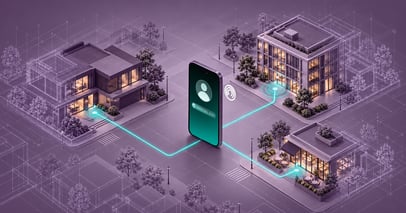
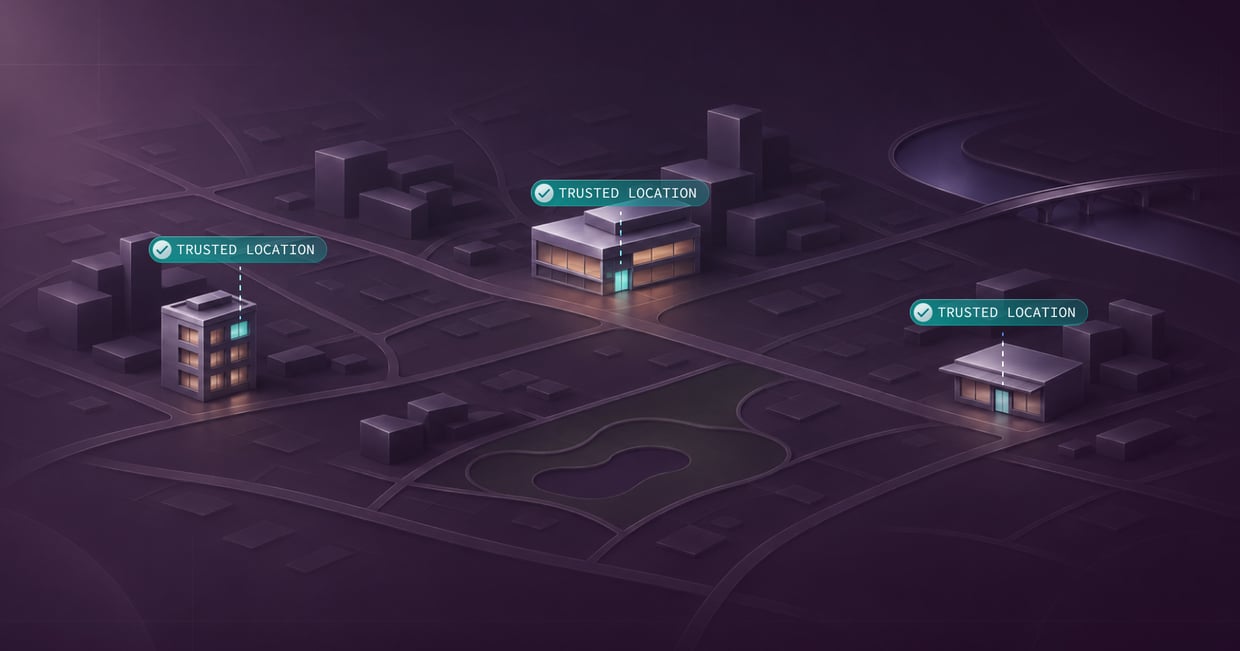
Incognia’s patented Trusted Locations technology helps companies recognize returning customers through the places they visit frequently. A Trusted Location is a familiar place identified from repeated device activity over time, including how often the device returns and how long it stays.
A login from a Trusted Location can give you more confidence that the request is legitimate. Alongside device and account checks, that history helps you decide when to let someone through and when to take a closer look.
How a place becomes a Trusted Location
A location becomes familiar through repeat visits. A device that regularly spends time somewhere builds a different history from one that passes through once. Over time, those patterns help Incognia identify places that can support recognizing the customer during a login or account recovery.
To recognize a familiar place, you need more detail than a city or neighborhood. Traditional location signals like IP and GPS just aren’t precise enough.
Incognia’s apartment-level indoor location intelligence helps distinguish activity between users within a building. That gives you more confidence that a login comes from a specific place associated with the customer’s past activity.
Persistent device intelligence keeps that history connected. By recognizing the same device across app sessions, Incognia can connect repeat visits over time. That history can then help assess future requests, including account recovery or a login from a new phone.
The location observations also need to be trustworthy.
Incognia combines signals such as Wi-Fi, Bluetooth, GPS, and more to recognize places.
Faking GPS coordinates alone doesn't recreate the surrounding signal environment. Location-integrity and tamper-detection checks help identify spoofing attempts and device manipulation, giving fraud teams a way to assess whether the location information is reliable.
Together, these capabilities help banks and marketplaces recognize familiar activity with greater confidence, reducing unnecessary verification while identifying requests that need closer scrutiny.
How Trusted Locations help assess account access
Say someone replaces their phone and needs to log in to their bank or marketplace account. The company hasn't seen this phone before, so it needs more information to decide whether the request is genuine.
If the login request comes from one of their Trusted Locations, that adds more confidence that it’s really that customer.
Our data shows that 95% of first logins on a new device occur at a Trusted Location.
This can also help when a customer approves a transfer in the banking app, for example. A recognized phone at a familiar place gives the bank information about that approval.
On a marketplace, a seller may need to recover access to their account. Location history can help the company assess whether the request comes from somewhere familiar to that seller.
Fraud teams use Trusted Locations alongside device integrity, account activity, and other risk signals to decide whether to approve the request or take a closer look.
Using location history to assess payment scams
A genuine customer can use their usual phone at a Trusted Location and still be following a scammer’s instructions. That is why payment-scam assessment also needs information about the person receiving the money.
Incognia’s Physical Social Graph uses Trusted Locations and persistent device intelligence to look for evidence of a real-world connection between the sender and recipient.
For example, two people’s devices may repeatedly appear at some of the same precise locations over time. That pattern can suggest a physical-world connection even before their first payment to each other.
A single overlap at a shared location tells the bank much less. Two devices may be in the same building by coincidence. The repeated pattern and the precision of the observations help determine how useful that history is.
Incognia’s Real-Time Scam Prevention uses relationship evidence alongside available recipient, device, and transaction information. That gives the bank more to assess than the sender’s identity and approval alone.
People also pay strangers for legitimate reasons. An observed connection can add confidence, but it doesn’t automatically make a payment safe. The bank weighs the available signals together to assess the risk.
Familiar places add evidence to fraud decisions
Trusted Locations gives fraud teams information drawn from repeated activity over time.
For banks and marketplaces, it can help assess account access from a new phone.
For banks assessing payment scams, it can also contribute evidence of a relationship behind a first payment.
Start with the decisions where your team needs more confidence, such as account recovery or a change to payout details. Familiar location history adds evidence to those decisions alongside your existing checks for account compromise and suspicious activity.
FAQs
A registered address is information the customer provides. Incognia’s Trusted Locations technology identifies frequently visited places from device observations over time. Entering an address doesn't establish that a device regularly visits it.
IP geolocation and GPS help estimate where a device is. Trusted Locations helps establish whether that place is familiar to the person using it. Incognia’s patented Trusted Locations technology uses device activity over time, including how often a device returns to a place and how long it stays. That history helps banks and marketplaces recognize a login from somewhere the customer regularly visits, even when they’re using a new phone.
Location patterns may provide evidence of a real-world connection even when two accounts have never paid each other. This depends on having usable information about both parties. The history won't identify every relationship or establish that a particular payment is safe.
Topics