Recognize the same user across devices.
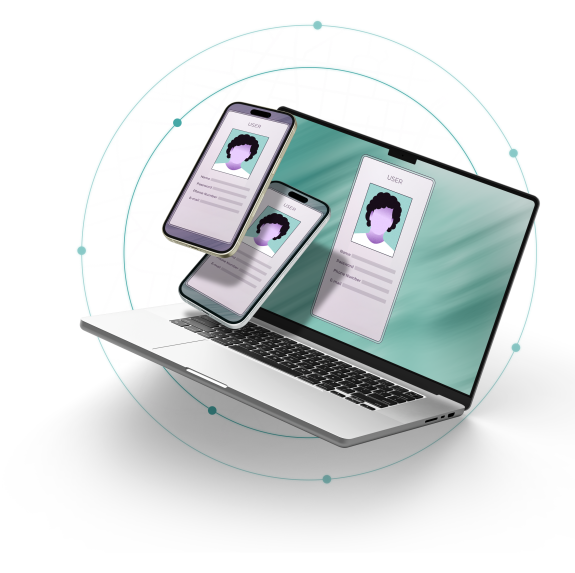
Recognize users across devices and accounts through device intelligence, location patterns, and account activity. Carry customer trust and fraud history forward when the device changes.
Trusted by fraud teams at the world's leading consumer platforms.





A new device shouldn’t erase what you know about a user.
-
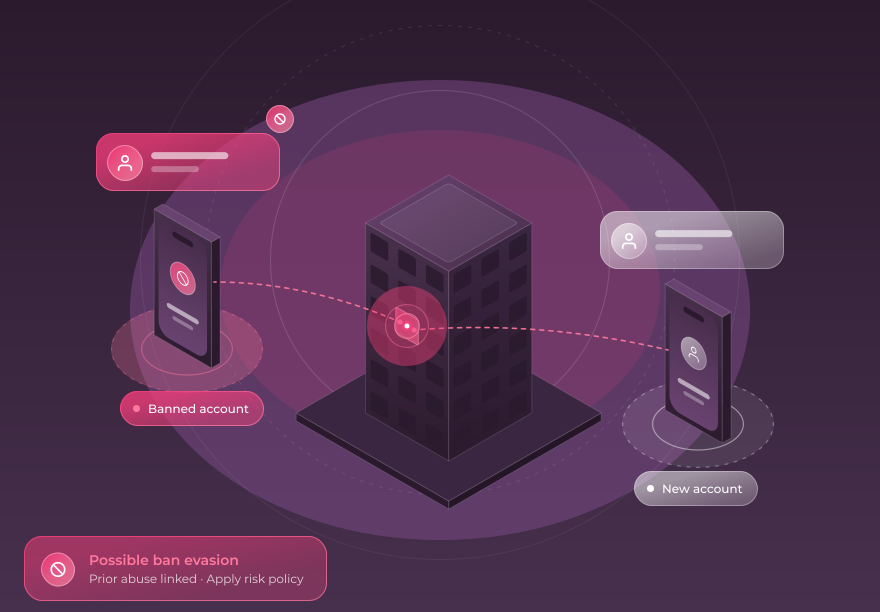
Repeat offenders look new.
A banned user returns on another device, leaving your team unable to connect the new activity to past fraud.
-
Returning customers face extra checks.
An established customer switches devices, but their trusted history doesn’t follow them into the next decision.
-
Abuse across accounts goes undetected.
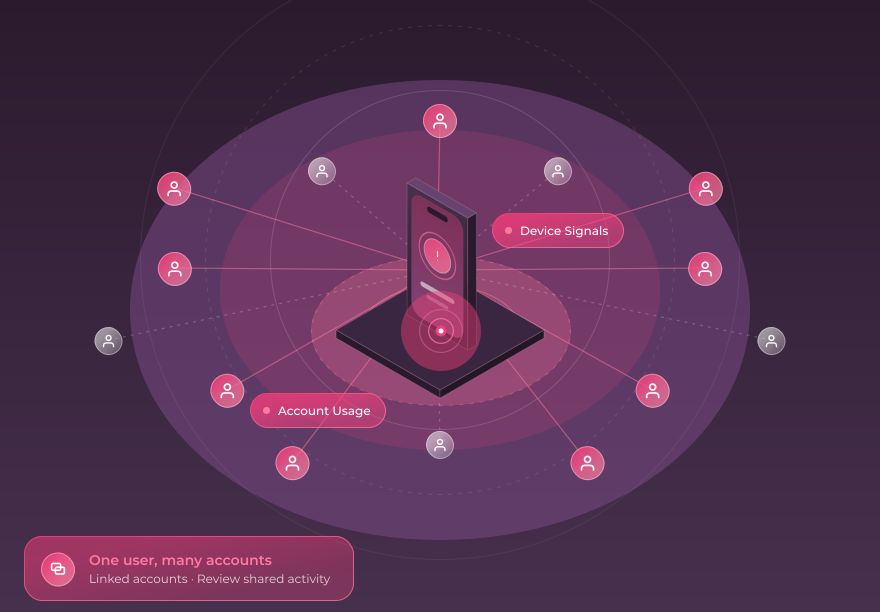
One person operates several accounts across devices, making repeated abuse harder to spot account by account.
Connect a new device to an established history.
Incognia ID combines device intelligence with location intelligence and account activity to recognize users across devices. Explore how those relationships help distinguish legitimate changes from repeat abuse.
What Incognia recognizes
How fraud and trust teams put Incognia ID to work.
-
One user across accounts and devices
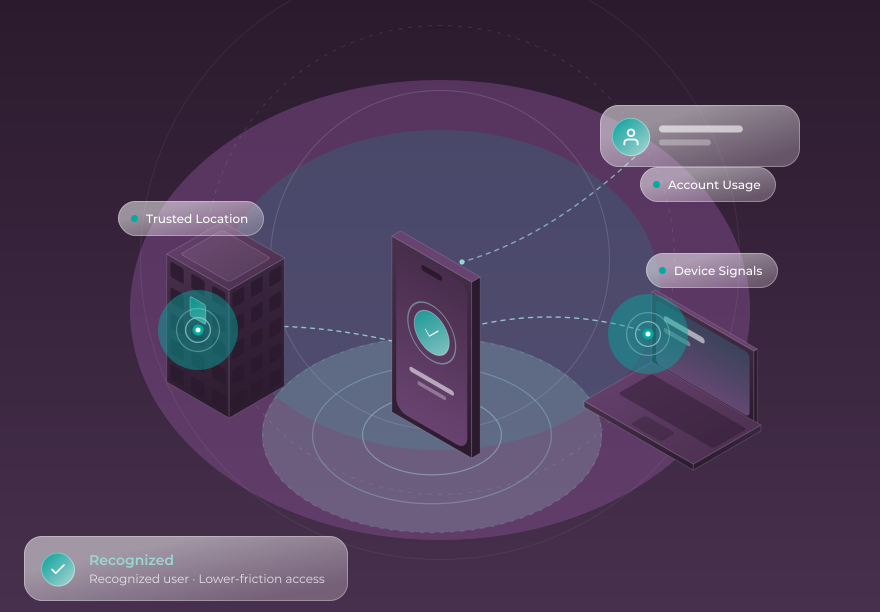
Connect activity across devices and accounts through recurring location, network, and account patterns to help recognize the same user.
-
Repeat offenders after a new device or account
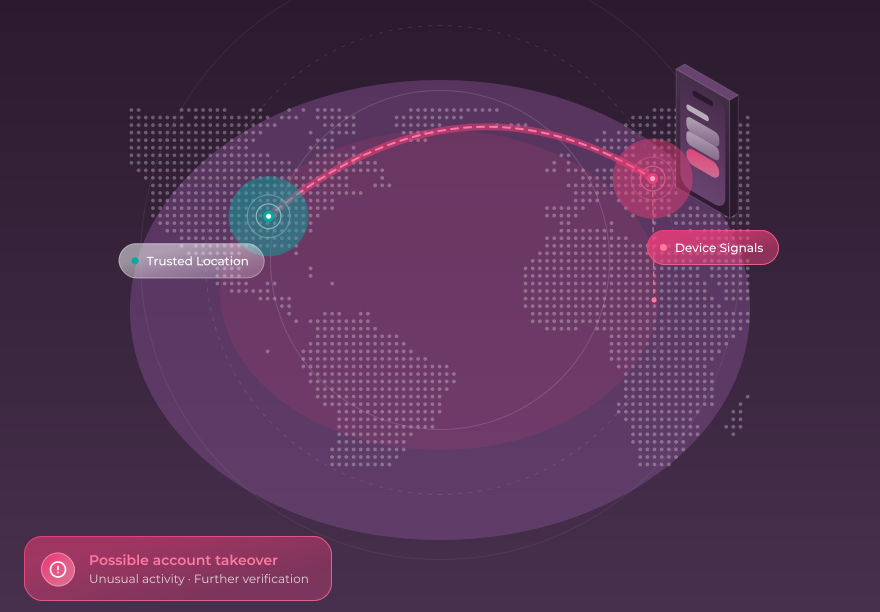
Connect new activity with earlier abuse through location and device-account relationships, helping identify repeat offenders who change devices or accounts.
-
Account sharing and handoffs
Identify changes in device, location, and account usage that may indicate sharing or a handoff, and assess them against established patterns.
-
New-device authorization
Use established user history to evaluate a new device and reduce unnecessary verification for returning customers.
-
Fraud farms and coordinated clusters
Surface clusters of devices and accounts that share a location and behavior but look unrelated when reviewed one at a time.
-
Identity and address mismatches
At onboarding, flag mismatches between a user's real-world behavior and the address they registered.


Common questions
What is Incognia ID?
Incognia ID helps recognize the same user across devices and accounts by combining device intelligence, location intelligence, and account activity. This connects new activity with established customer trust and fraud history.
How is Incognia ID different from Device ID?
Device ID recognizes a physical device, including across attempts to change its identifiers. Incognia ID builds on that recognition to connect activity across different devices and accounts associated with the same user.
Does sharing a location mean two accounts belong to the same person?
A shared location is one input. Incognia ID evaluates it alongside device relationships, account activity, and patterns over time to assess whether activity may belong to the same user.
Can Incognia ID recognize a returning user on a new device?
Yes. Incognia ID uses established location patterns and device-account relationships to help connect a new device with a previously recognized user. That connection can support lower-friction access for legitimate customers or reveal links to earlier abuse.

The layers behind Incognia ID
Tamper Detection
Identifies rooted or jailbroken devices, app clones, and hardware spoofing.
Learn moreDevice Intelligence
Persistent device recognition that survives resets, reinstalls, and emulators.
Learn moreLocation Intelligence
Apartment-level location signals that tie identity to real-world behavior.
Learn more