Intent Intelligence for Banks: Detecting Risky Transactions Even When AI Agents Are Verified
Intent Intelligence uses established customer activity and physical-world relationship evidence to identify risky actions by verified AI agents, helping prevent fraud with fewer unnecessary interruptions.
Subscribe to Incognia’s content
A customer authorizes an AI agent to transfer money from their bank account.
The agent is verified, and the bank has confirmed that it has permission to act on the customer's behalf.
But there's still an important question: Does what the agent is trying to do make sense for this customer?
Just because a verified agent initiated a payment, it doesn’t automatically mean that the recipient can be trusted or that the proposed action is consistent with the customer’s established activity.
As banks begin supporting agent-driven transactions, they'll need ways to evaluate the risk of each proposed action, even when the agent is legitimate and authorized.
That’s what we’re bringing with Intent Intelligence.
Introducing Intent Intelligence
We're introducing Incognia Intent Intelligence, a new capability that helps banks and fintechs assess whether digital actions proposed by AI agents make sense for the customers they represent.
Intent Intelligence supports both customer-owned AI agents and financial institutions' own AI assistants acting on behalf of customers.
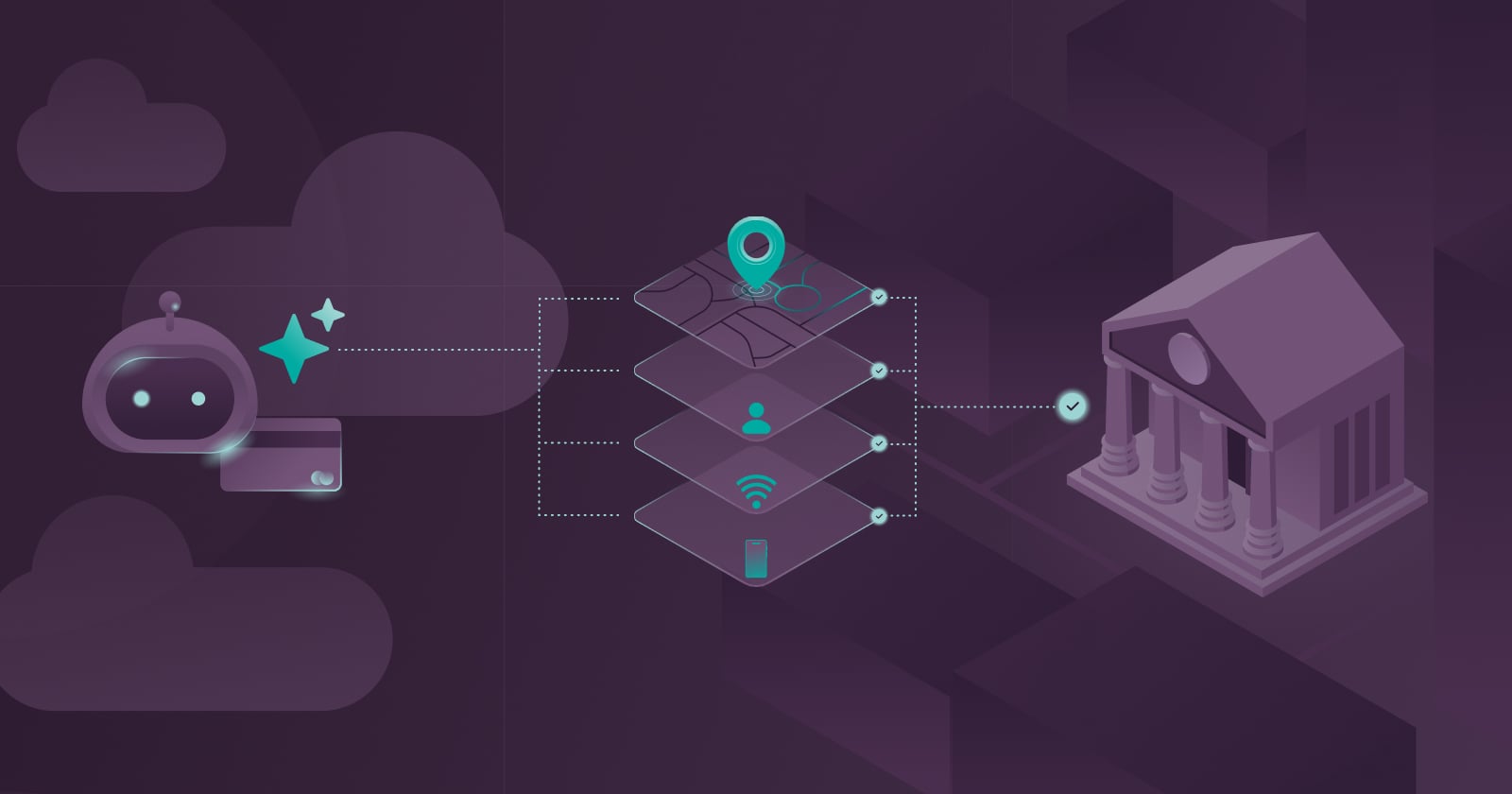
When an agent requests a transaction, Intent Intelligence evaluates the proposed action against the customer's established activity, relevant transaction patterns, and the events leading up to the request. It also draws on Incognia's physical-world intelligence to assess the people and accounts involved.
This helps financial institutions identify suspicious payments and risky account changes before they take effect, while letting lower-risk requests proceed without asking customers to take over every interaction
Grounding the assessment in the customer’s physical-world context
AI agents may operate from cloud infrastructure, separate from the customer's own device. This creates a challenge for financial institutions that rely on device and behavioral signals to recognize customers and assess transaction risk.
Incognia uses intelligence from the customer's trusted devices and established location history to bring physical-world context into the assessment of an agent's proposed action.
A key part of this approach is Incognia's Physical Social Graph, which combines apartment-level location intelligence with persistent device recognition to uncover evidence indicative of real-world relationships between people.
In an analysis of more than 300 million transactions, we found that:
- 79.2% of legitimate transactions showed evidence of a physical-world relationship between the sender and recipient
- 86.2% of reported scams showed no observed physical-world relationship between the parties
These findings suggest that real-world relationships can provide valuable context when assessing payment risk, even when the transaction is authorized by the customer.
When an AI agent initiates a bank transfer, Intent Intelligence can help answer questions such as:
-
Does the transfer fit the customer's usual transaction patterns? An unusually large payment or a transaction that differs from established activity may warrant additional scrutiny.
-
Is there evidence of an established relationship with the recipient, or connections to known abuse? Repeated activity at shared trusted locations can indicate a relationship between the parties, while connections to locations associated with known fraud may raise concern.
-
What happened before the transaction? A recent account recovery, device change, or newly added recipient may be relevant when evaluating the request.
How Intent Intelligence informs a decision
Consider a customer whose verified AI agent initiates a bank transfer. Before the funds move, the bank can use Intent Intelligence to assess the proposed transaction in real time.
1. The agent requests a transfer
The bank calls Incognia's API to evaluate the proposed action and available context before executing the transfer.
2. Intent Intelligence assesses the proposed action
Incognia evaluates whether the transfer aligns with the customer's established activity, considering transaction patterns, relevant events leading up to the request, and evidence from the physical social graph alongside other available risk signals.
3. The bank uses the assessment
Incognia returns risk assessments and supporting intelligence.
The bank applies its existing risk and authorization policies to determine whether to proceed with the transfer, request additional customer confirmation, or intervene.
4. The bank brings the customer into the process if confirmation is needed
If additional approval is required, the bank can ask the customer to confirm the transaction through its own channels, like their app.
Incognia's human-in-the-loop verification supports this process by assessing the customer's device, account relationship, device integrity, location context, and network risk alongside their approval.
The bank then completes its risk and authorization checks before deciding whether to execute the transfer.
What makes an AI-driven transaction trustworthy?
The value of Intent Intelligence becomes clearer when considering how different signals can change a bank's assessment of an otherwise authorized transaction.
When the evidence supports the transaction
An AI agent requests a transfer that fits the customer's established transaction patterns.
Incognia's Physical Social Graph also identifies shared Trusted Locations between the sender and recipient, providing evidence indicative of an established real-world relationship.
Combined with other risk checks, these findings support allowing the transfer to proceed without unnecessarily interrupting the customer.
When the evidence raises concerns
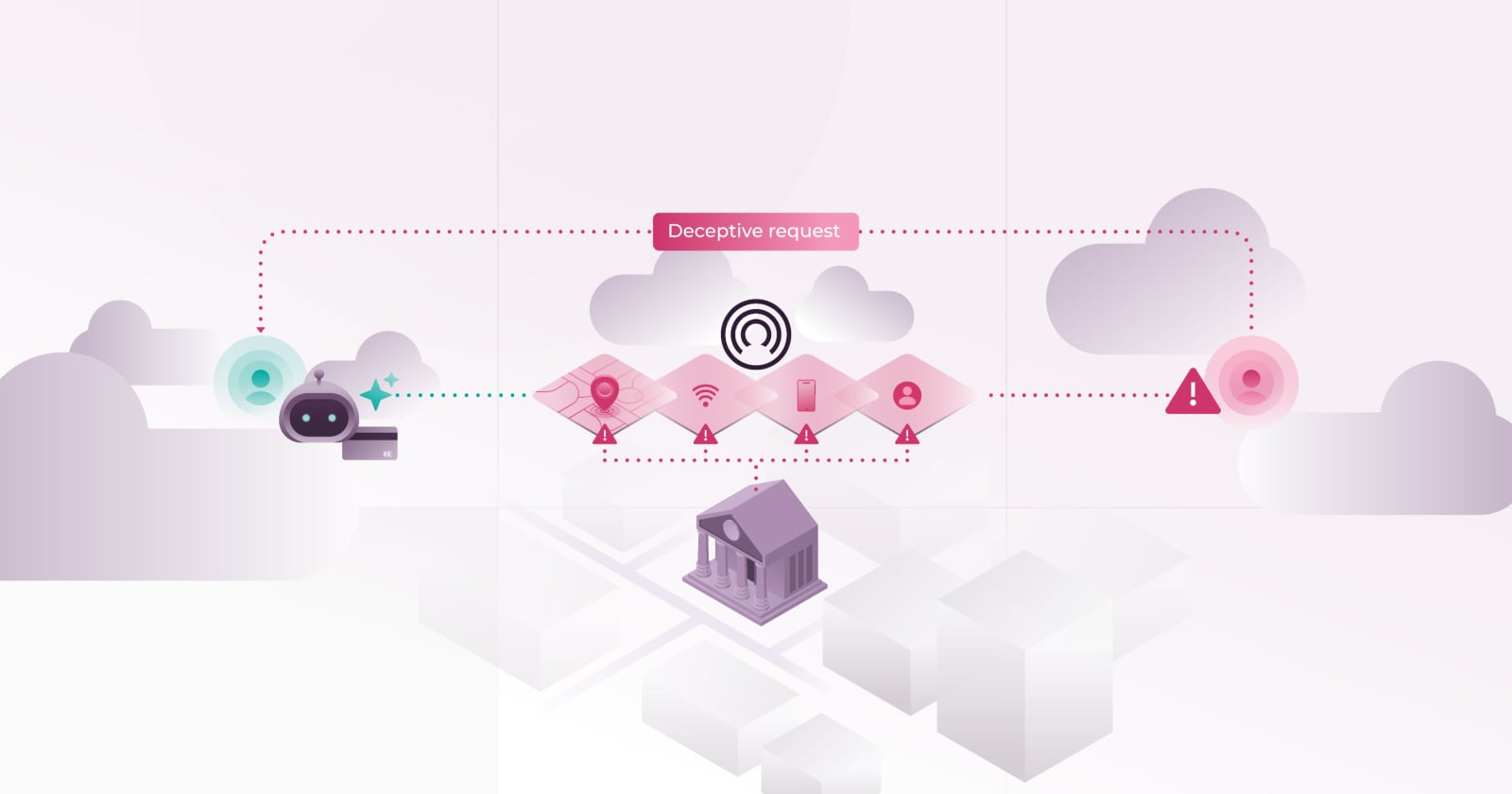
Now consider a transfer that differs significantly from the customer's usual activity.
Intent Intelligence also identifies available intelligence connecting the recipient to an apartment associated with known fraudulent activity.
Although the AI agent is verified and has permission to initiate the transfer, the combination of unusual transaction activity and the recipient's connection to known abuse gives the bank reason to investigate before sending the money.
Neither an unfamiliar recipient nor a shared Trusted Location is enough on its own to determine whether a payment is fraudulent or legitimate. The assessment depends on the combined evidence.
This approach builds on Incognia's Real-Time Scam Prevention, which helps financial institutions identify suspicious payments by analyzing real-world relationships between senders and recipients.
Intent Intelligence brings that same physical-world foundation into the assessment of agent-driven actions, combining relationship intelligence with transaction patterns and the events leading up to a request.
Preserving the convenience of AI agents without compromising security
One of the main benefits of AI agents is their ability to complete tasks on behalf of customers without requiring constant involvement.
Requiring customers to confirm every transaction reduces the convenience of delegating those tasks.
Intent Intelligence helps financial institutions determine when additional verification is warranted. Transactions supported by trusted evidence can proceed with fewer unnecessary interruptions, while suspicious requests receive further scrutiny.
And its applications extend beyond payments.
For example, an AI agent might request a change to a customer's account recovery email. Intent Intelligence can help the bank evaluate the account activity and events leading up to that request to determine whether additional customer verification is necessary.
When additional confirmation is needed, Incognia's human-in-the-loop verification can support that process, allowing the bank to maintain appropriate controls over sensitive actions.
As customers increasingly rely on AI agents to manage their finances, financial institutions will need to assess whether the actions those agents propose make sense for the people they represent.